
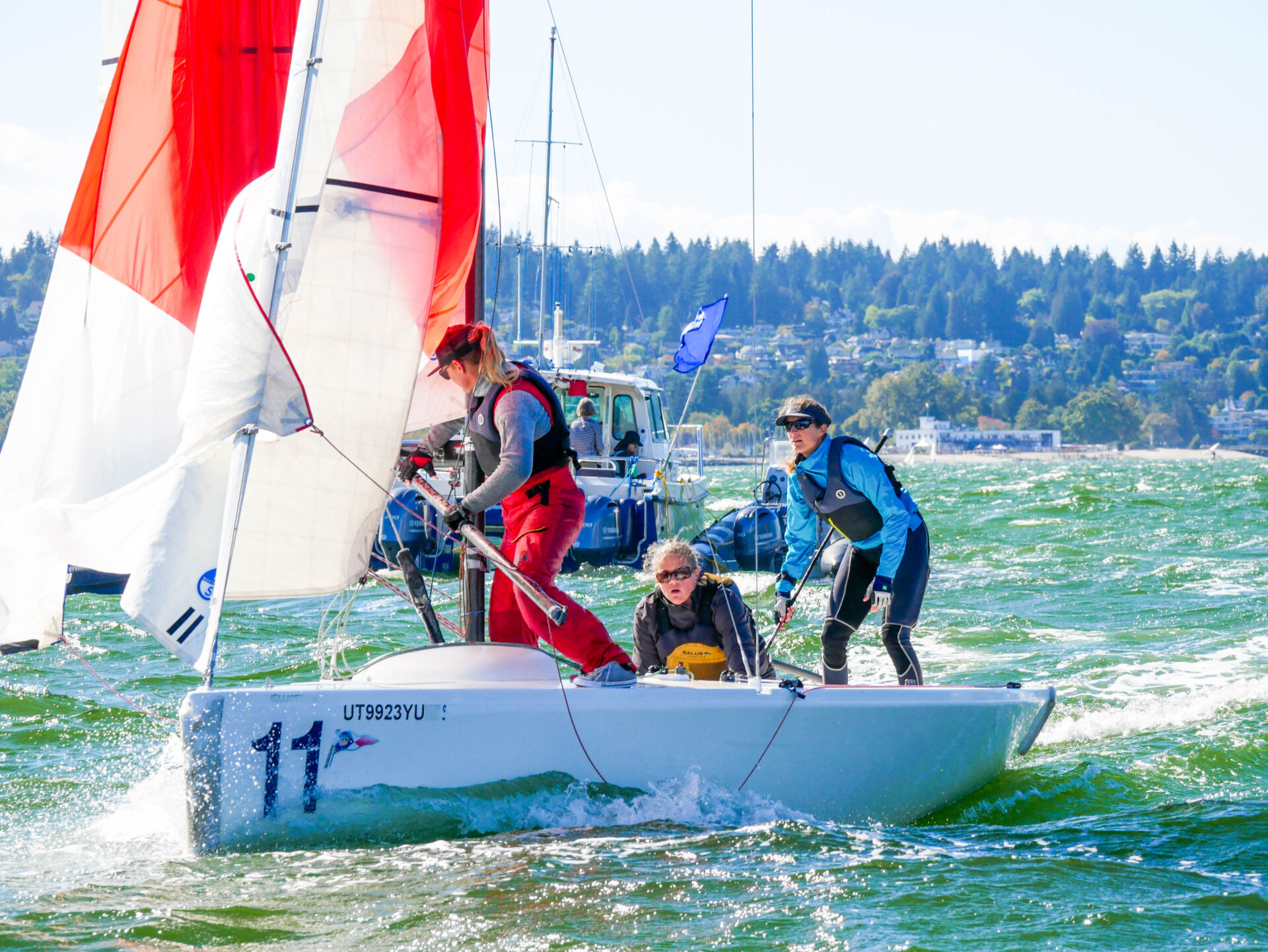

Three years ago, Tammy Danforth raced a J70 as tactician in Hamburg, Germany, and changed the course of women’s sailing in BC. She didn’t win the Helga Cup, the world’s largest all-female regatta, but she left with a prize nonetheless—a collaborative idea to create an annual women’s invitational at the Royal Vancouver Yacht Club (RVYC) to showcase female sailors and bridge the gap for young women graduating from junior sailing programs. Thanks to a member’s generous donation, the club already owned 13 Elliott 6m keelboats. With these former Olympic match-racing boats sitting in the marina, the vision for a Helga Cup-style invitational became instantly attainable.
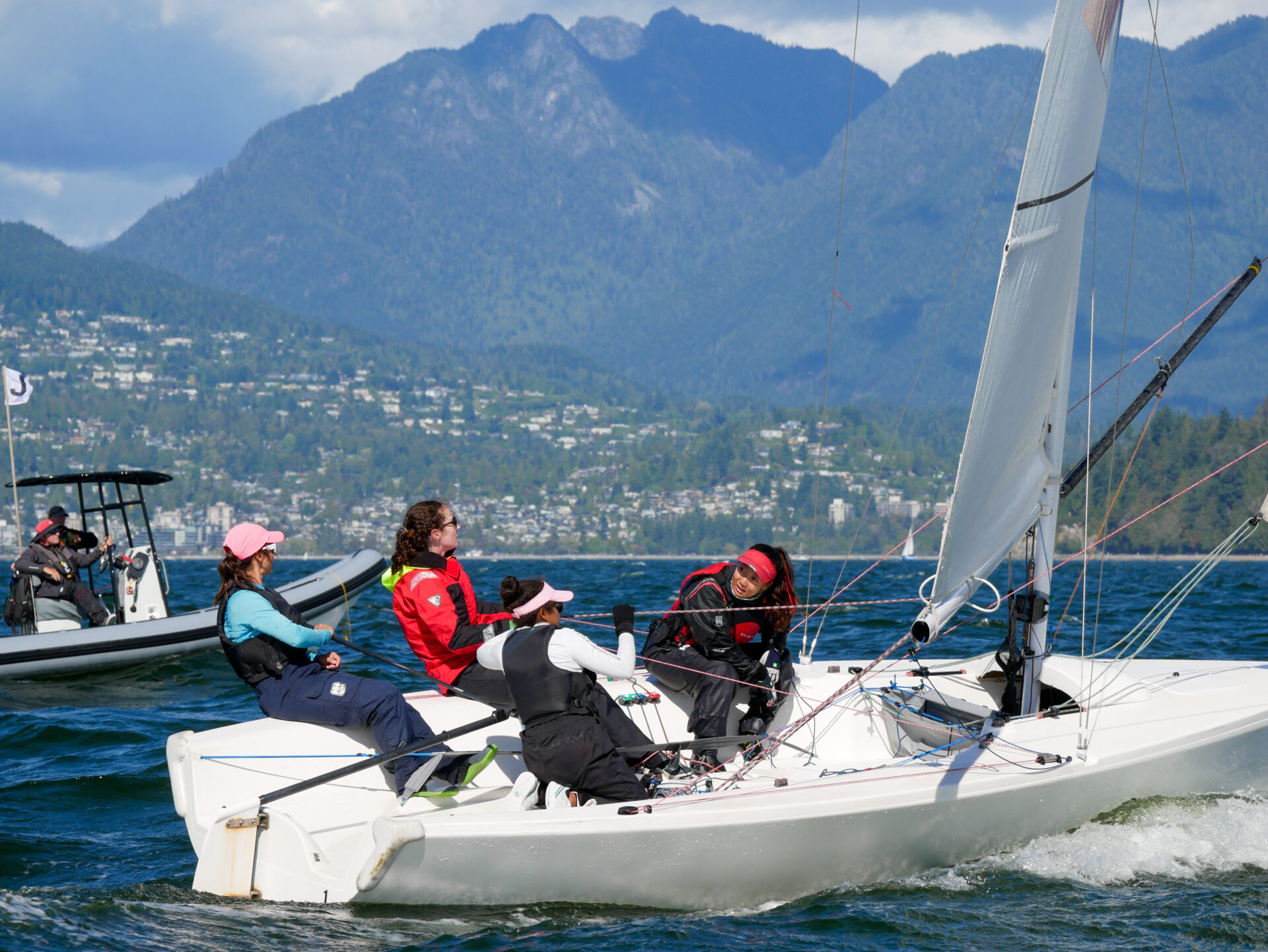
Entering its fourth year, the RVYC Women’s Invitational attracts top female sailors from Olympic to Corinthian level to compete, build community, and showcase talent on English Bay. This year’s regatta runs from September 18 to 20, kicking off with a practice day followed by two days of racing.
“Young women graduate from the junior race team, and that’s where their sailing career kind of stalls,” notes Danforth. Sailing remains male-dominated; data from BoatBrands shows that only 18 percent of primary boat owners in the US are women. As owners typically skipper their own boats and take on lead roles, top leadership positions are often less accessible to women and youth. Danforth explains that an all-women’s regatta removes that structural barrier. By ensuring every position is filled by a woman, it builds the tactical confidence and sailing resume required to step into core positions on privately owned, mixed-gender racing boats.
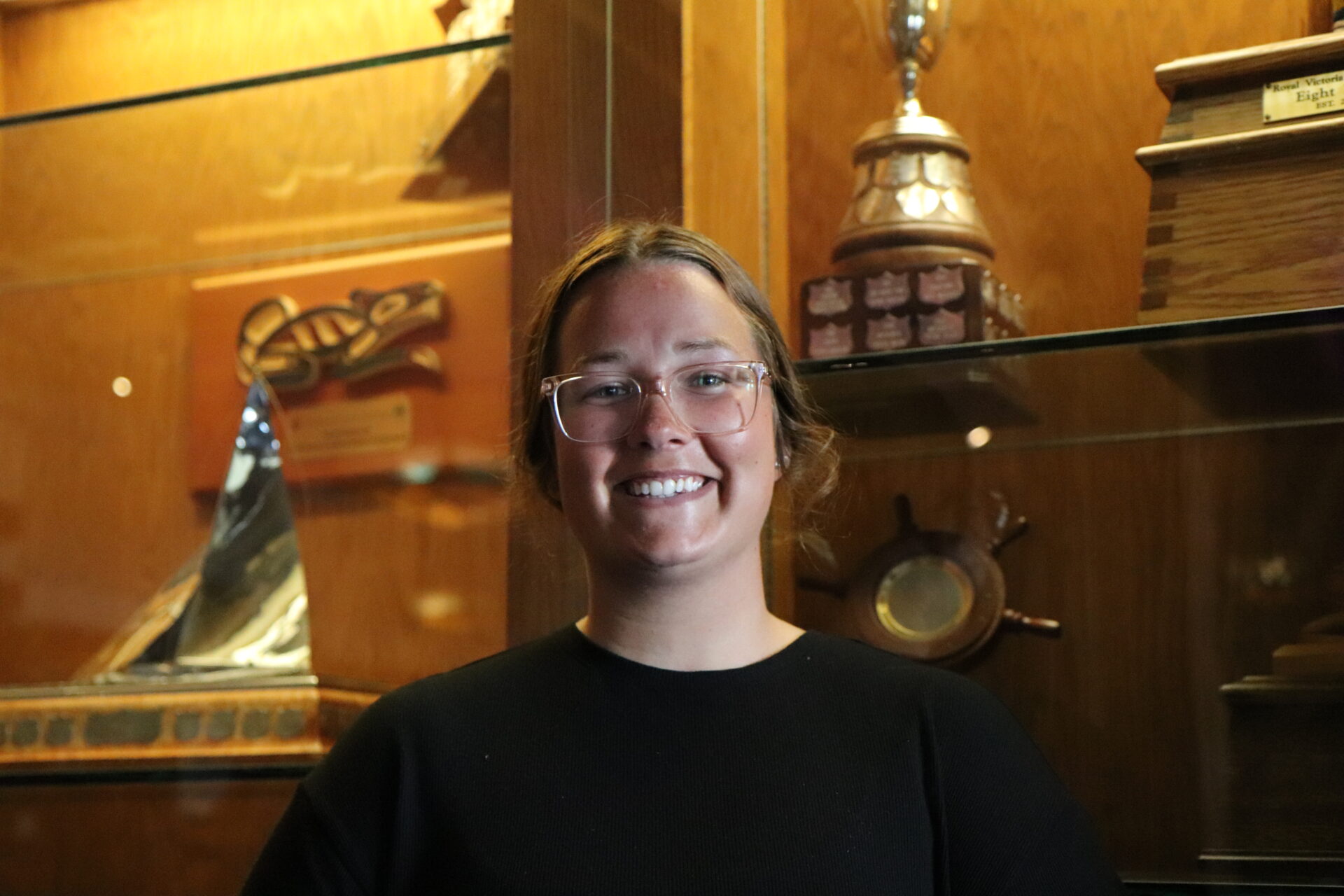 Eagle Skipper Shaylynn Thibeault at the Royal Victoria Yacht Club
Acting Sub-Lieutenant Shailynn Thibeault is no stranger to male-dominated environments. Long before navigating West Coast start lines, she learned to sail on a lake in Alberta, where the dinghy sailing gender split was nearly equal. Moving into keelboats and later the Navy, she noticed a shift: “It’s a much more male-dominated environment,” she says, noting that women make up only about 17 percent of the Canadian Armed Forces (CAF). Yet, her foundational years as a sailing instructor shaped the leadership style she now brings into her roles as a Naval Warfare Officer and instructor for the CAF’s week-long Competing Crew sailing course.
The Navy’s sailing program races for training, not for leaderboard placement. Earlier this year at the lively Swiftsure race, skipper Thibeault chose to reef early and leave the spinnaker in the bag to keep her largely green team safe and comfortable—choices that cost them speed but reflected the Navy’s emphasis on safety and completing the objective. While they ultimately bobbed anticlimactically across the finish line, Thibeault felt jubilant pride. “It’s very fulfilling as their sailing instructor to go through the full-cycle moment and accomplish something alongside them,” she says.
While Swiftsure demanded naval discipline and restraint, the RVYC Women’s Invitational offers Thibeault a rare opportunity to hold nothing back. Supported by the Canadian Forces Sailing Association (CFSA) and a summer of training, her crew, Lieutenant Celeste Dalpra, Sub-Lieutenant Tricia Higgins and Acting Sub-Lieutenant Camdyn Morris, is set up to be in top form.
Practicing on Wednesday race nights on a borrowed Sonar keelboat in Esquimalt Harbour, the crew receives valuable feedback from CFSA members. While skill can be drilled, crew dynamics are best when a natural fit occurs, and Thibeault got an early glimpse of this in their first race together.
“The crew chemistry clicked the moment we stepped onto the boat,” the team shared, describing a relaxed, supportive and fun atmosphere. This ease didn’t prevent them from getting tangled in a kelp forest, however. Yet, the impromptu team-building exercise solidified their trust and communication as they worked to free their keel. Equipped with a checklist for their next race, the team is excited to get back out on the water.
Even with the possibility of placement in the invitational’s races, Thibeault is looking forward to the experience the most—an opportunity to showcase the lighter side of women in the military through competition, camaraderie and fun. Representing the CAF for the first time in the invitational, she hopes to inspire youth and women considering the military. “Literally the possibilities are endless as long as you put your mind to it,” Thibeault says, a perspective she hopes to carry through the rest of her career.
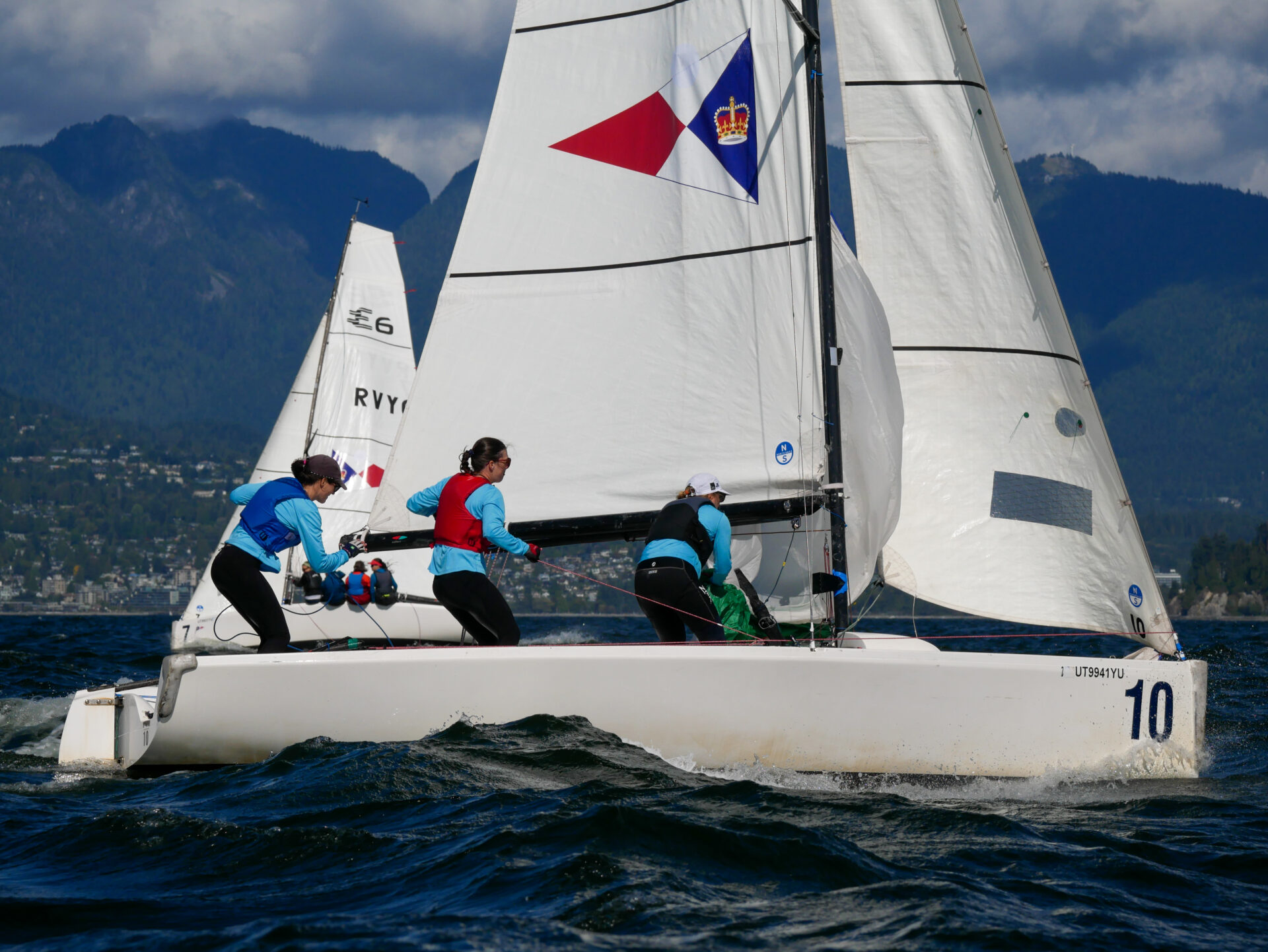
The invitational is designed to be more than a set of races; it is an experience that connects a community. Participants arriving from across North America are billeted on RVYC members’ boats, giving the event a summer-camp feel of shared challenges and late-night conversations. For Thibeault and her team, it means immersing themselves in a civilian yacht club culture and, for once, being surrounded by a majority of women.
Danforth says community is the heart of the event. “It’s not just sailboat racing—it’s the time afterwards, where people talk, share stories and have a laugh.” With sponsors like TD Wealth and Mustang Survival, the invitational organizes meaningful social events to ensure participants connect on and off the water.
That intersection of leadership and visibility resonates far beyond the docks. “We have a lot of amazing women in the military and for them to be able to showcase all of that skill, it’s a great platform,” says Catherine Dangerfield, VP & Region Head, Pacific Region TD Private Wealth Management and honorary Lieutenant Colonel for the Seaforth Highlanders of Canada. “I have no doubt they’ll be pretty competitive.”
When asked whether female-only events risk siloing women rather than advancing them, Dangerfield doesn’t hesitate—representation matters, in the corporate world and on the water. “Although this is centered on sailing, a lot of the skills are shared, including leadership and teamwork, decision-making and resilience. Seeing women sailors allows other people to see themselves there, and if you can see it, you can be it.”
Change can move like an ebbing tide: subtle at first, until suddenly the shoreline looks entirely different. Danforth is seeing that measurable shift. A decade ago, very few young people were racing on the big yachts; today, they fill the crews. Club members are shifting, too. “There are definitely boat owners at Royal Van and at other clubs who are giving helm and tactician roles to women,” Danforth says. “There is more awareness and willingness—men who are real sponsors and allies.”
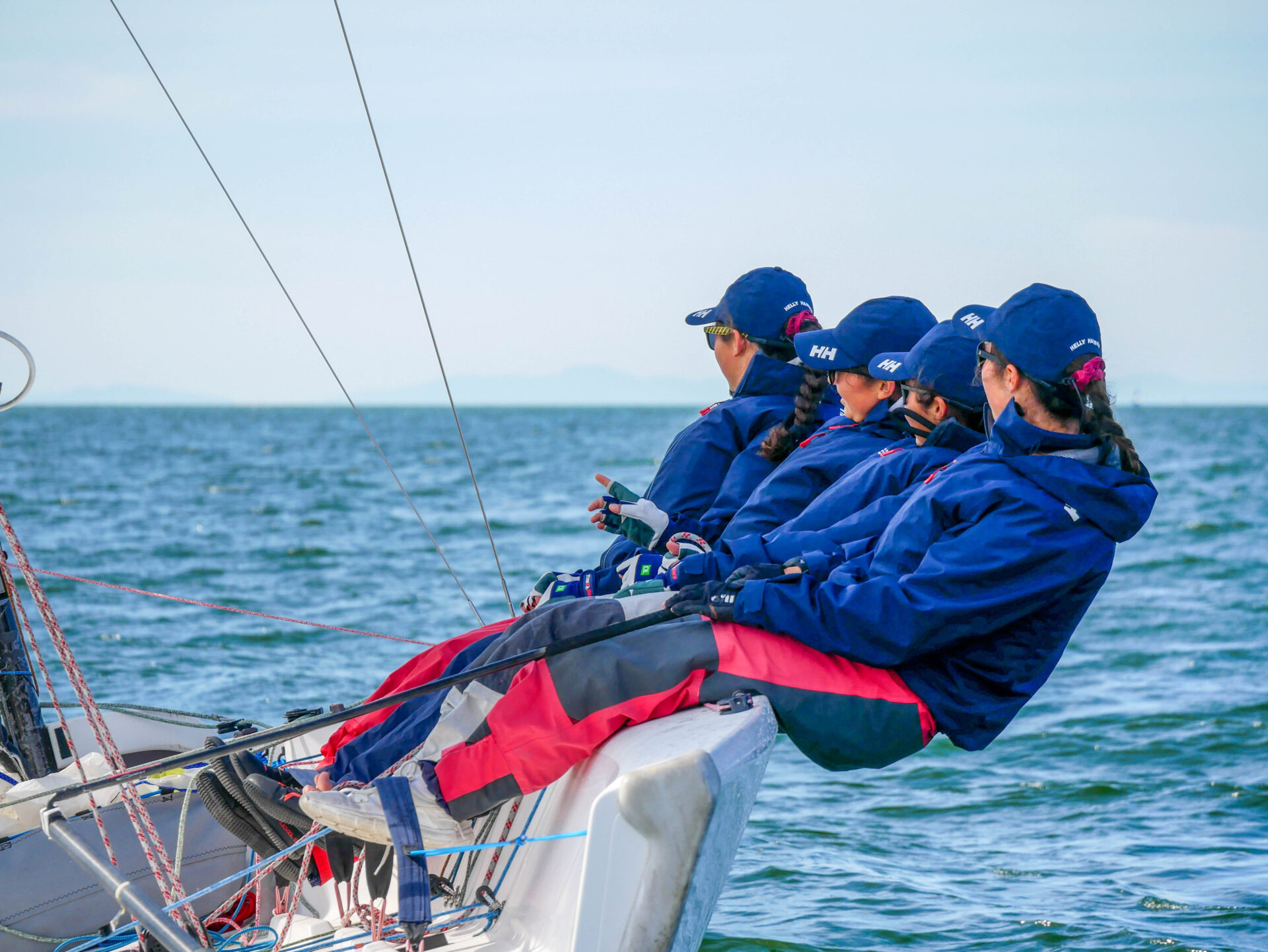
The waters of English Bay will undoubtedly bring tougher tactical challenges in mid-September than the summer training grounds of Esquimalt Harbour. While the competition on the racecourse will be fierce, Thibeault and her crew will have a proud community of colleagues and sailors cheering them on.
“I would love to come back to the regatta next year. It would be really good to see CFSA send a female team every year,” says Thibeault.
That continuity of opportunity is exactly how systemic change takes root, and the ripple effect is already making waves on the docks. “The young women of the club are inspired,” says Danforth. The women’s invitational has earned its place among the RVYC regattas, ensuring visibility for female sailing talent for years to come.
Photos courtesy Jack Rieder (IG: arialvisuals.fpv)