
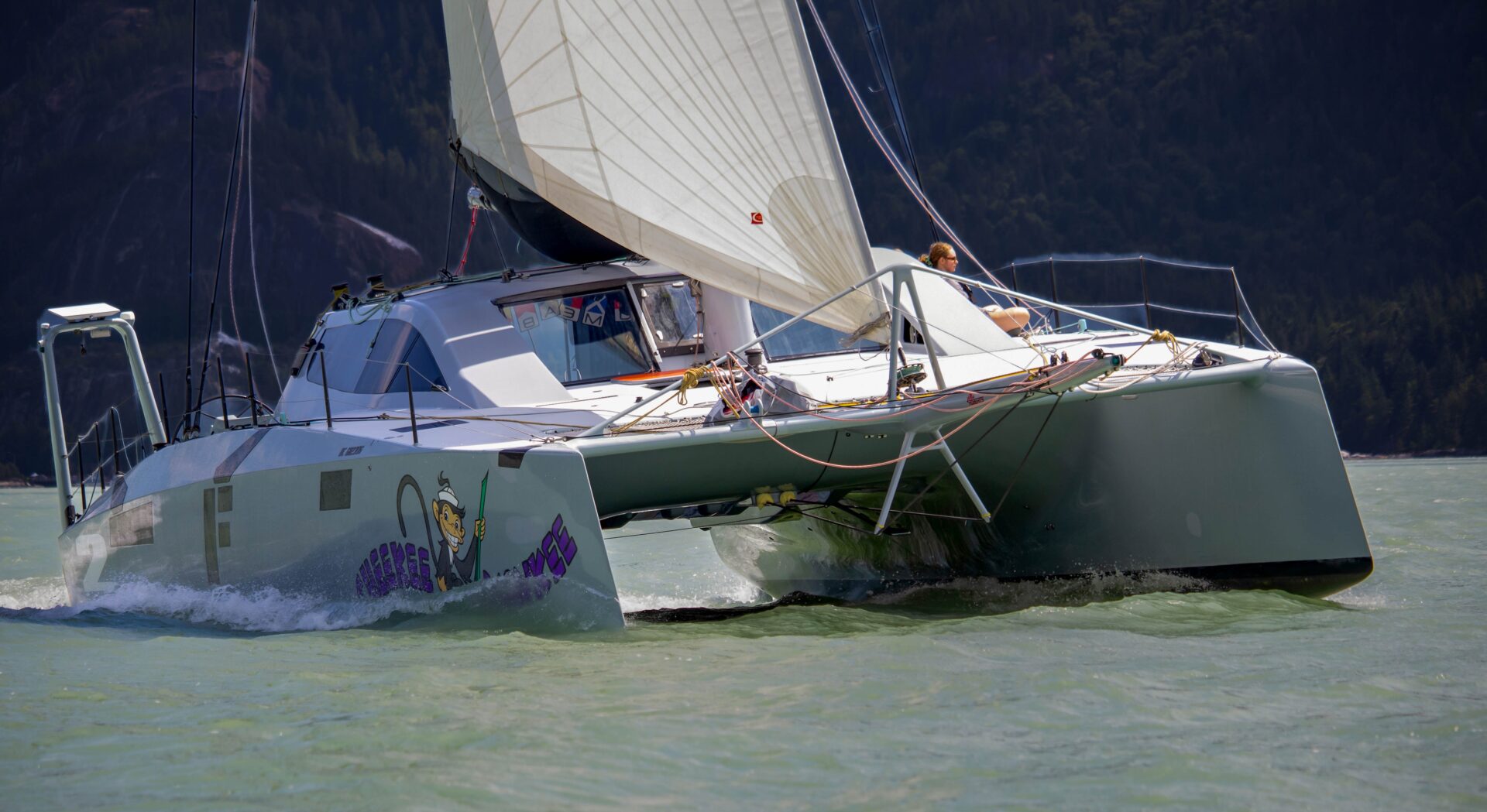

OFFSHORE YACHT RACING is not a comfortable sport. To make a boat go fast, wind, tides and currents combine to generate the conditions for high performance. Finding the elusive balance of maximum speed without being overpowered requires a hyper-alert crew constantly trimming sails and grinding winches. Testing these limits on the Pacific Northwest’s offshore racing circuit is what defines the region’s top teams—especially those eyeing the region’s pinnacle endurance challenge: the rugged, biennial Van Isle 360 circumnavigation.
To better understand the teams wild enough to take on this challenge, I tracked five skippers through the 2026 Swiftsure International Yacht Race, hosted by the Royal Victoria Yacht Club. In its 81st year, the historic race lived up to its slogan, “Always a Challenge.” The Juan de Fuca Strait served up a blunt reminder of the fine line between performance and danger, propelling the fleet into 25 to 35-knot winds on choppy seas.
To thrive in these conditions, a boat needs more than a fast hull. It needs a crew with a psychological edge that is as unique as the boats in the fleet.
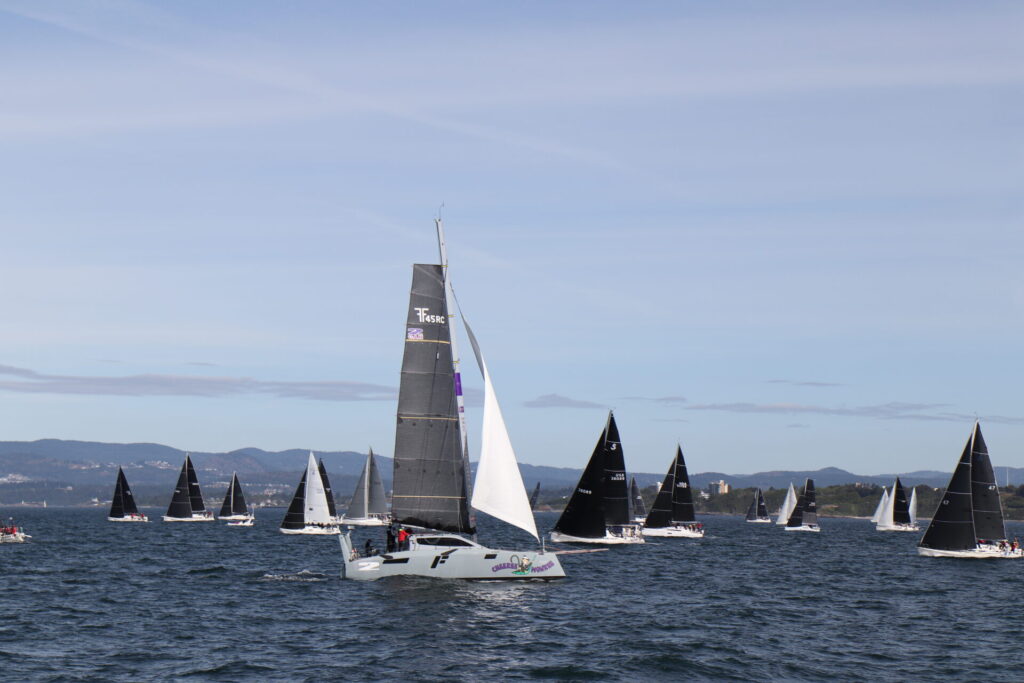 Cheekee Monkee amidst a sea of sails.
CHEEKEE MONKEE
F-45RC Catamaran
Kim Alfreds
The blustery conditions of Swiftsure are what veteran skipper Kim Alfreds lives for: “I’m an adrenaline junkie,” he says with a laugh. “The reason I keep breaking things is because I push the boat to its limits.” Alfreds has a storied history of gear failures and mishaps—including a famous capsize off Fort Lauderdale, Florida, and a broken leeward foil during the Pacific Northwest Offshore race—less than a week before Swiftsure. Yet, after a quick repair in Victoria, he was ready to test the limits again.
Despite experiencing some of the coast’s gnarliest conditions, Alfreds doesn’t hesitate when I ask if he’s ever been afraid: “Fear is not a useful emotion when things are not going well.” He describes the mood on the boat as “casual”—the crew signs up for the rush and are seasoned sailors, owning or crewing other boats. “They all know that I’m a very even-tempered, calm guy who loves a disaster.” It is, perhaps, this deep experience with racing and disaster that allows Cheekee Monkee to push the boundaries and have fun. And at Swiftsure, it paid off with a new record set for multihulls on the Juan de Fuca course at 6 hours and 58 minutes.
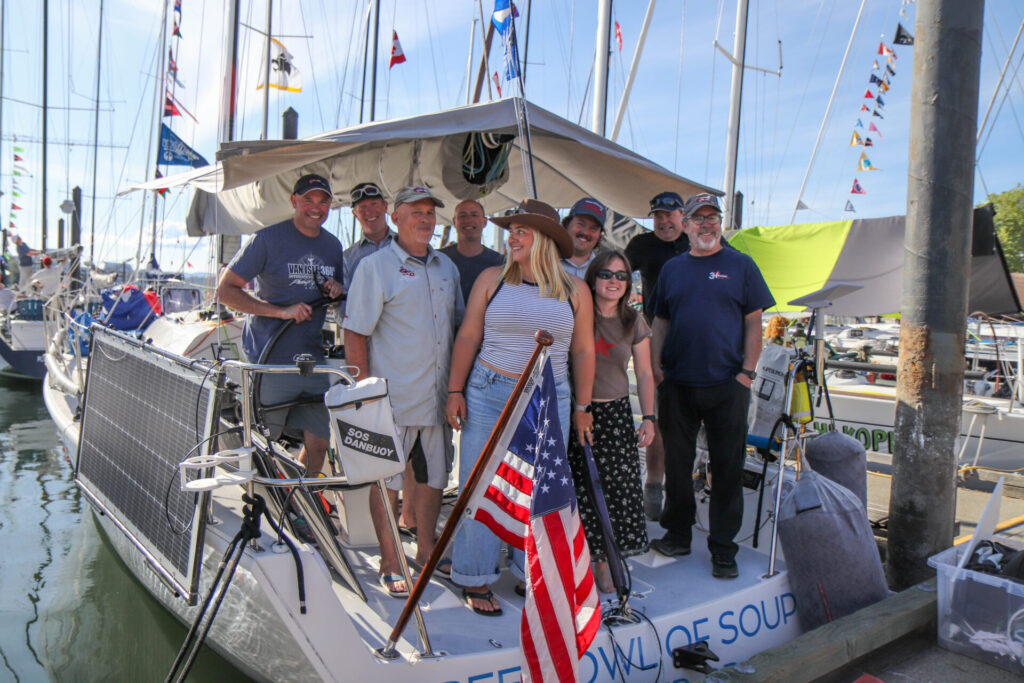 The crew aboard Free Bowl of Soup.
FREE BOWL OF SOUP
Club Swan 42
Doug Schenk, Eric Hopper, Matt Davis
Don’t mistake their easy-going charm for a lack of competitiveness—Free Bowl of Soup has big dreams. They race hard, but they happen to know, as part-owner Matt Davis says, “a happy boat is a fast boat.” Fun is part of their culture, from the tacky hats that gave the boat its name, an ode to the 1980s film Caddyshack, to a fun-o-metre in the cockpit. Co-owned by Doug Schenk, Eric Hopper and Davis, the team naturally settles into a thoughtful style of co-operation and mentorship. “Having the young people on the boat is huge,” says Schenk, noting how everyone learns from each other. Age plays a functional role, too: “We need someone who’s got the knees up on the floor. We can’t do stuff like that.”
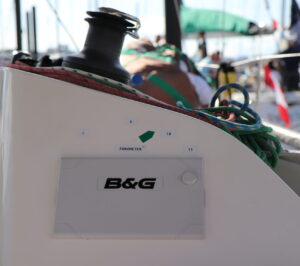 The “fun-o-metre” on Free Bowl of Soup climbing to 10.
Three crew members, Piper Easton, Sam Hopper and Annika Phillips, are in their early 20s and have been racing for years, having earned their place aboard.
Last year, Easton wrote her finals while racing the Van Isle 360. The nine-leg race circumnavigating Vancouver Island spans 14 days and stops most nights at a harbour except for the two offshore overnight sails from Winter Harbour to Ucluelet and then to Victoria Harbour. It was on the Winter Harbour stretch that Easton had an “oh shit” moment: “I think it was blowing like 25, 30, 35 consistently.” Shortly after the start, they “shredded the No. 4, ripped a fractional, ripped the other No. 4 and we lost two battens from our tier three.” With the foresails in tatters, they made do with just the mainsail heading into Ucluelet. Cracking jokes and trusting the crew are how she handles rough conditions like that—it’s all “mental growth,” she says.
It is this mental resiliency gained on the Van Isle 360 that will serve Easton well as Free Bowl of Soup continues their 2026 campaign through the Pacific Cup and into the Southern Ocean for the Rolex Sydney Hobart Race.
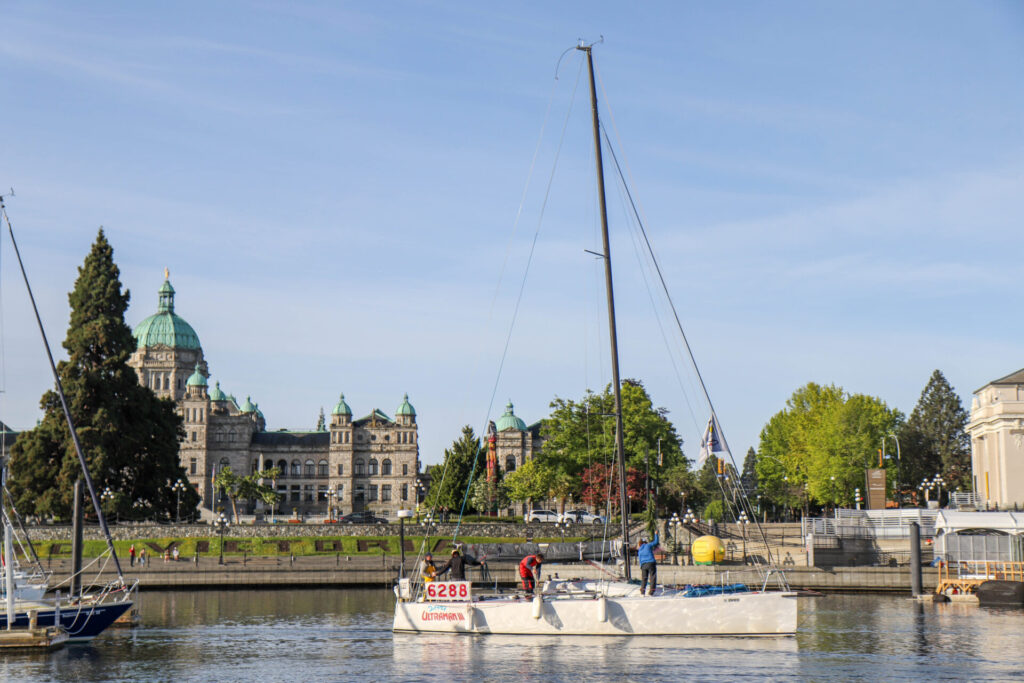 Ultraman III.
ULTRAMAN III
S-40 MOD
Jason Saunderson
A veteran skipper of the PNW offshore circuit, Jason Saunderson just wrapped up his 11th Swiftsure aboard Ultraman III. For Saunderson, a regular competitor in the Van Isle 360 with four editions under his belt, Swiftsure serves as a critical pressure test for his racing campaign. With such an active racing schedule and a penchant for offshore challenges, Saunderson runs a comprehensive program where crew culture is prioritized just as highly as tactical skill.
To build that culture, Saunderson focuses his vetting process on the psychological. “With distance racing, especially overnight, it’s a lot of trust,” Saunderson explains. “That is the core part of what we are looking for—how people are getting along.”
That culture starts at the top. Crew member Emily Gray reveals that “while he is loud, blunt and takes up a lot of space, underneath the big personality is someone who genuinely cares.” This legendary storyteller has built a tight-knit community that has inspired several crew members to buy their own boats.
It is exactly this blend of community and fierce trust that prepares a crew for the punishing west coast of Vancouver Island. “After you do a race like Van Isle, with the conditions and the length, other ones are challenging, but they are significantly easier,” says Saunderson. “The real ocean is what tests the team and shows the skill: you find strengths and weaknesses.”
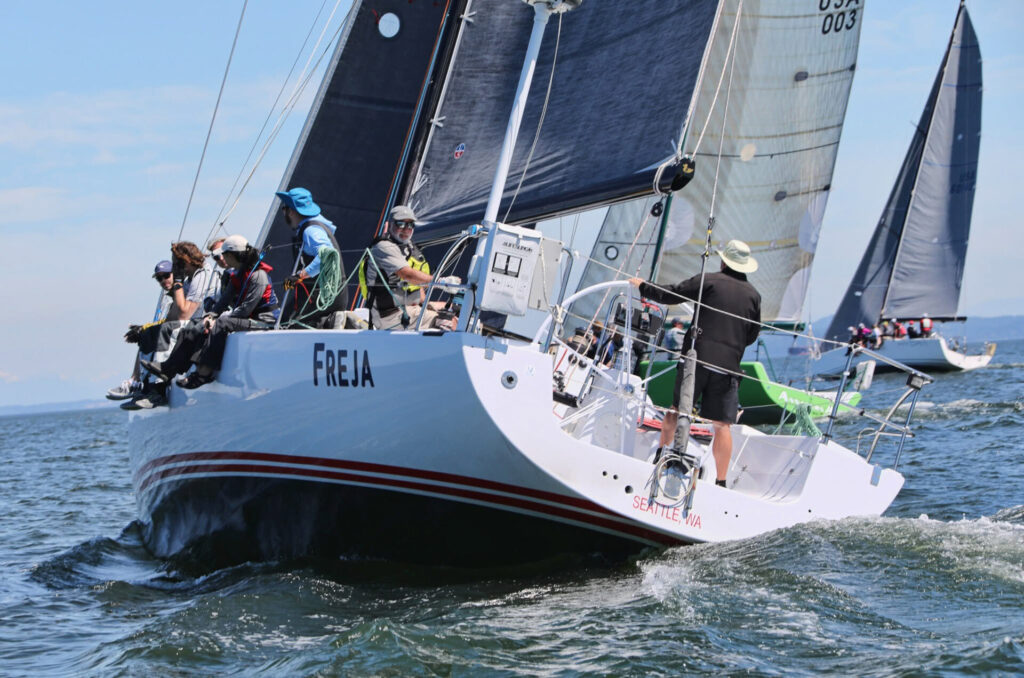 Freja.
FREJA
Aerodyne 43
Jonathan Cruse
An unspoken rivalry exists between Freja and Free Bowl of Soup. The two frequently find themselves trading places on the leaderboard—including in the 2025 Van Isle 360, where Free Bowl of Soup won second in their division with Freja chasing them in fifth. At this year’s Swiftsure, they paced each other past Race Rocks yet again, with Free Bowl of Soup edging out only 12 minutes ahead.
Discipline and relentless practice are skipper Jonathan Cruse’s plan for closing the gap in the Pacific Cup. Despite this intense training, Cruse is careful to maintain balance on board. “We’re competitive, but I would say we’re not militaristic,” Cruse notes. “If you’re too hard-line militaristic, you actually go backwards. I think we’re at the right level of intensity.”
The intensity of a competitive offshore boat like Freja relies on team co-ordination and calm leadership that is willing to put safety ahead of results. While enjoying an athletic run from Ucluelet to Victoria in the 2025 Van Isle 360, Freja got a tear in her mainsail. Not wanting to rip it further, Cruse slowed the galloping boat. “Yeah, it was hard to go slow and then realize that it probably penalized our results because we had a pretty good margin out ahead of the fleet at that point,” says Cruse. For a boat built on meticulous preparation, managing a crisis is simply part of the game.
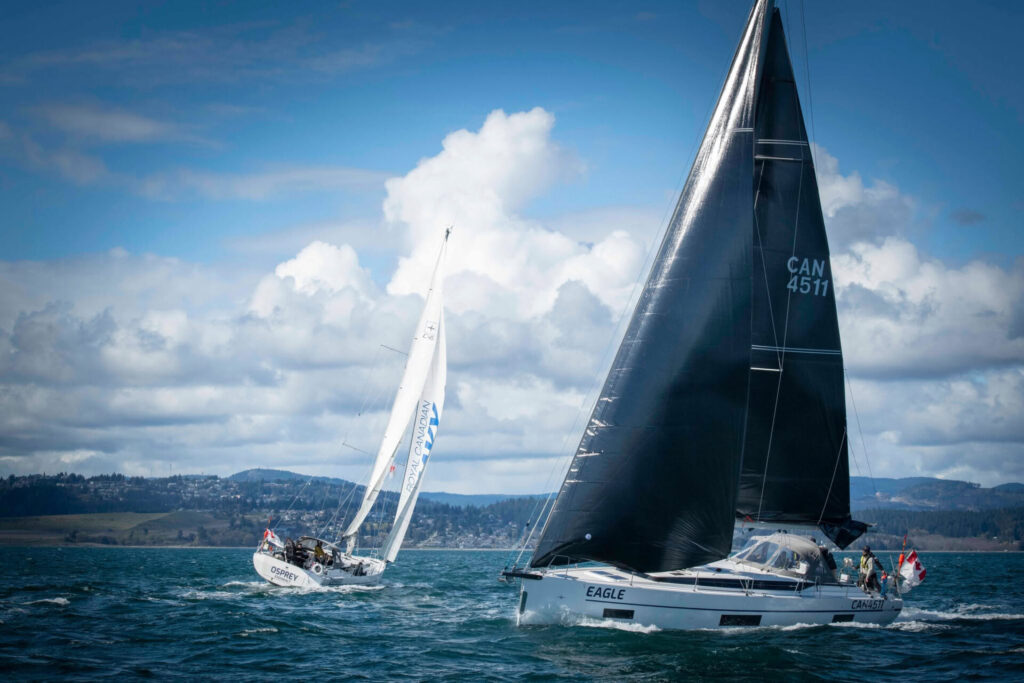 STV Eagle.
STV EAGLE
Bavaria
Shailynn Thibeault
The Canadian Navy has been a part of Swiftsure since its inception, and the 2026 fleet featured the Navy’s newest training vessel, STV Eagle. Skippered by Naval Warfare student Shailynn Thibeault, Eagle’s objective wasn’t to win, but to use the rugged offshore race as a training lab for seamanship, resilience and communication under pressure. Having previously competed in the Van Isle 360 on a campaign that was forced to retire, Thibeault’s performance at Swiftsure makes a compelling case for her to skipper in the 2027 race.
Unlike most competitive teams with long-tenured crew, Eagle rarely sees the same crew. “The skipper will make sure that they have a core crew and then build off of that with people with less experience,” explains program manager Josh McCullough. “If we just take the experienced people every time, we’re kind of thwarting the goals of the program.”
That focus on teamwork and grit was tested when 25 to 35-knot winds triggered a war of attrition across the fleet, forcing at least nine offshore boats to retire from Eagle’s division alone. Yet, amidst conditions that forced even the early leader to surrender—the 55-foot racing machine Scatteraction—Thibeault and her newly formed crew stayed with their mission. Navigating heavy weather was exactly what they came for, and despite finishing last on the clock, they passed their seamanship test.
THE CAMPAIGN CONTINUES
What’s next for these skippers and crew? Like the steep waves of the Juan de Fuca Strait, some are chasing the crest. The young team aboard Free Bowl of Soup is riding the peak of their racing careers, setting their sights on the Pacific Cup and the swells of the Rolex Sydney Hobart later this year. Others, like Alfreds of Cheekee Monkee—with an illustrious sailing career of multiple Van Isle 360 overall wins and over 30 years of Swiftsure races—are content to just go sailing. “I’ve won so much stuff over my career,” he said, “I’m not super competitive any longer. I like to make the boat go fast and whatever happens, happens.”
Ultimately, Swiftsure proved to be less of a destination and more of a testing ground. Whether that trajectory leads across the Pacific into the Southern Ocean, or closer to home for the 2027 Van Isle 360, these distinct programs demonstrate that campaign success requires far more than mechanical discipline. The ultimate test of offshore racing is never just about battling the elements on the water—it is about mastering the unique psychological edge within, and as a team.