
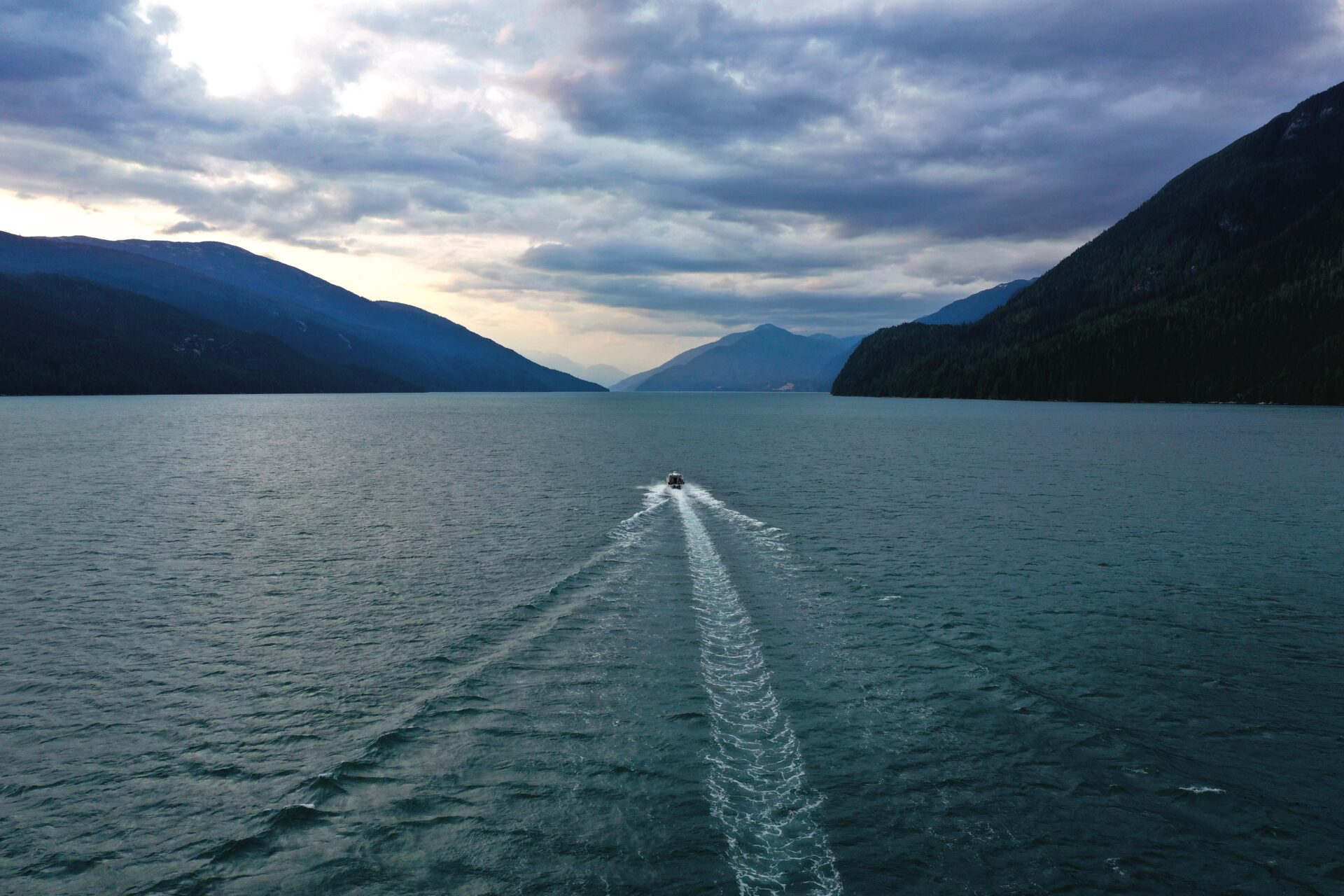

I’ve long dreamed of the Portland Canal. Big mountains. Unreal fjord. True frontier.
Back in my old ski-bum days, I saw a mountain video from the Portland Canal filmed aboard the MV Ocean Explorer, a 110-foot ship equipped with a Bell 407 chopper and heli-pad. The ski crew headed north up the winding, twisting inlet, looking for first descents, big-mountain ski runs and a little nautical adventure. The images somehow stuck with me.
That was more than 15 years ago, and the opportunity to run the 110 miles from Prince Rupert, British Columbia to Stewart/Hyder on the Alaska border just never materialized.
Until last season.
WITH THE INDEFATIGABLE partnership of my sidekick Travis McNeice, we laid plans for a four-day run up the Portland Canal to Stewart, BC, and her twin town Hyder, Alaska. The big boat cruise (with a side of Alaska halibut fishing) seemed the perfect remedy for a rainy Prince Rupert July. Or so we figured, anyway.
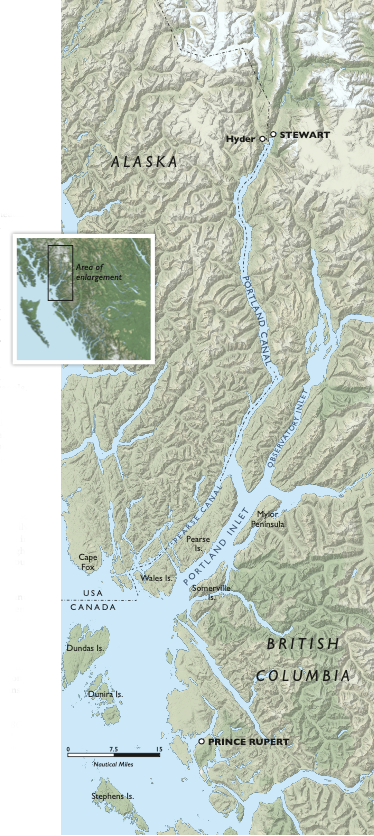
The Portland Canal is a 71-mile arm of the larger Portland Inlet, running northeast from Chatham Sound just north of Prince Rupert. True Wild West, the canal was at the centre of the Klondike Gold Rush Alaska boundary dispute settled in 1903 with the Hay-Herbert Treaty. The agreement set the Canada-United States border straight down the middle of the Portland Canal, ending at Stewart/Hyder. Now the twin towns share an amicable relationship, with the type of border crossing you’d expect in the “last frontier.”
The rig of choice was our trusty Kingfisher 3025 Offshore, running Yamaha F200 twins with a fuel capacity of 160 gallons. The welded aluminum cruiser was perfect for this kind of trip, but we knew we’d have to fuel up in Stewart for the return run. Fuel economy would be paramount and we planned to run accordingly, trimmed out at 4,100 rpm, burning about 16 gallons per hour and running at 26 knots. Good numbers.
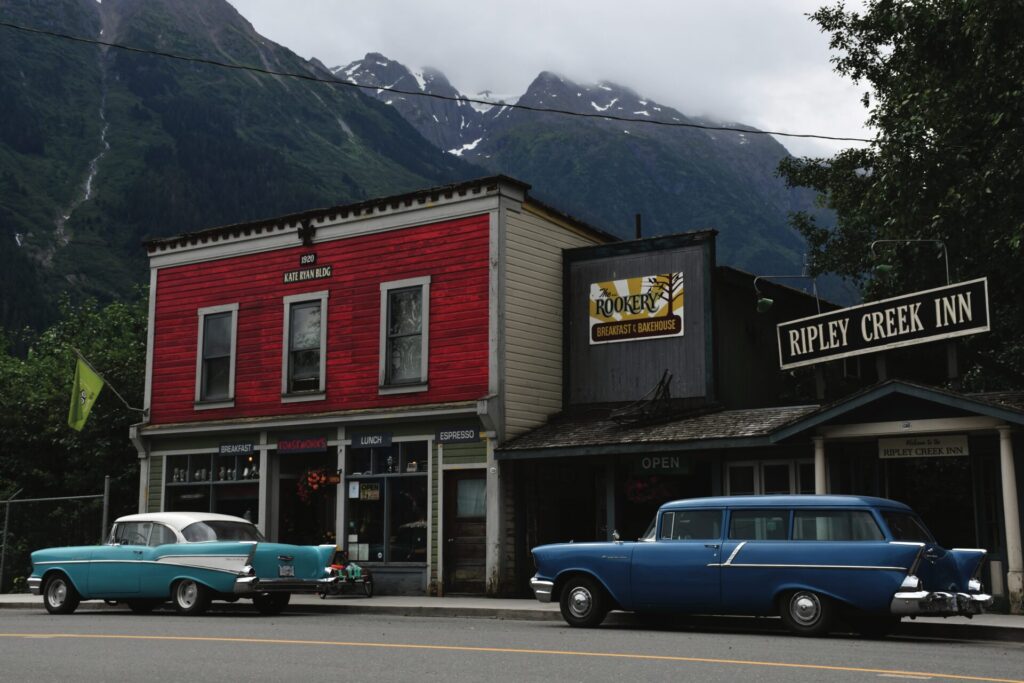 Stewart sits at the head of the Portland Canal bordering Hyder, Alaska—population 80.
WITH PASSPORTS, ALASKA fishing licences and supplies packed away we departed Prince Rupert early on a Tuesday morning. McNeice, a coast guard communications man by trade, made a call to US authorities to inform them of our plan. We would be moving in and out of Alaska waters for four or five days but only making port in Stewart, which negated the need for clearing customs. We only had to make a return phone call when finally entering back into Canada.
 Getting “Hyderized” at the Glacier Inn.
Water was calm heading north through Chatham Sound past Dundas Island and we made short work of the 40-mile run to Nakat Bay in Alaska. This was the first stop on our planned adventure and involved a little Pacific halibut fishing.
We’ll admit to some angling biases here: I’m lucky to have worked in BC sport fishing for 15 years making Big Coast television and promoting salmon conservation; McNeice is a former commercial fisherman, fishing guide and also works on pilot boats for Rupert Port Authority. We’re pretty fishy boat guys.
 We anchored in 160 feet of water and started jigging salmon bellies on the rocky bottom. It wasn’t long before McNeice hooked into a nice halibut and a lengthy battle ensued. Fishing was steady and we brought a number of nice bottom fish to the boat. Despite the beautiful Nakat Bay setting and fun fishing, we packed things up after about four hours. The boat ride ahead was long and daunting.
Fortunately, the seas were down and wind was light on our big cruising day. I had the Kingfisher fuel burn right on and we raced back into Canada before heading northeast up the Portland Inlet. The inlet is big water, as wide as eight miles in places, and made a couple guys in a 30-foot boat feel pretty small.
After speeding around Pearse Island for 30 miles, we banked to port and entered the Portland Canal. Looking at my chart, it was cool to see the US/Canada border split the skinny waterway. After many years dreaming of seeing this place, I was pretty stoked to be walking the line. Strike one off the boat-cruise bucket list!
TO HELP DOCUMENT and film the adventure, we brought along our cameraman Chris Wheeler, a professional drone pilot and great shooter. His skills were a fine addition and the aerial perspective helped frame a truly huge place.
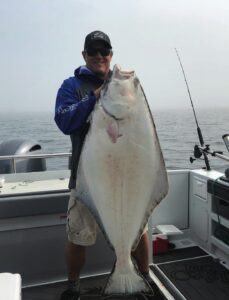 Tim brings a huge halibut on board.
The seas remained stellar for our run and I kept the boat trimmed out at 26 knots. The skies were cloudy and held a certain mystique. We were blown away by the steep fjord and peekaboo images of snowy mountaintops along the way. Closer to the canal head the glacier-fed water turned green and murky, similar to many other coastal inlets, and signified an end to our journey.
It was almost 21:00 when we pulled into Stewart. We grabbed our gear and closed up the boat, happy to leave it behind for a few days of adventure on land. The King Edward Hotel was our home base and we were excited to check out Stewart/Hyder and generally unwind after long days on the boat.
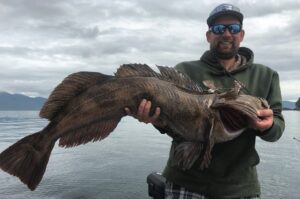 Travis with a giant lingcod.
Located at the head of the Portland Canal, Stewart, BC is the most northern point on Canada’s West Coast and reachable only by boat or a big northern drive. Gold and silver mining dominated early Stewart, with a population numbering around 10,000 before the First World War. It currently sits at less than 500 and relies on port activity, resource extraction and tourism economies.
McNeice, Wheeler and I had a couple mellow days in Stewart and found its sleepy pace and old-time style both nostalgic and charming. People were outright friendly and assisted us in a number of trip details. McNeice was good friends with Jimmy Hislop, owner of our hotel, who loaned us a vehicle and helped us scrounge jerry cans to refuel the boat. After a few good meals, beers and chuckles, Stewart had warmed on us like a home-cooked meal.
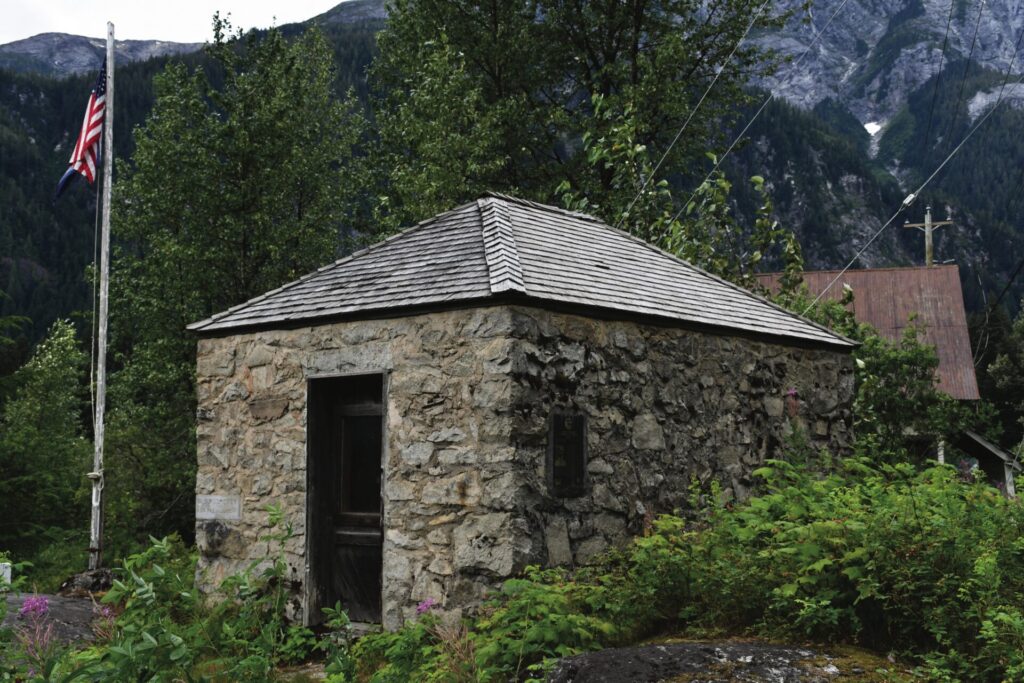 Hyder border lookout.
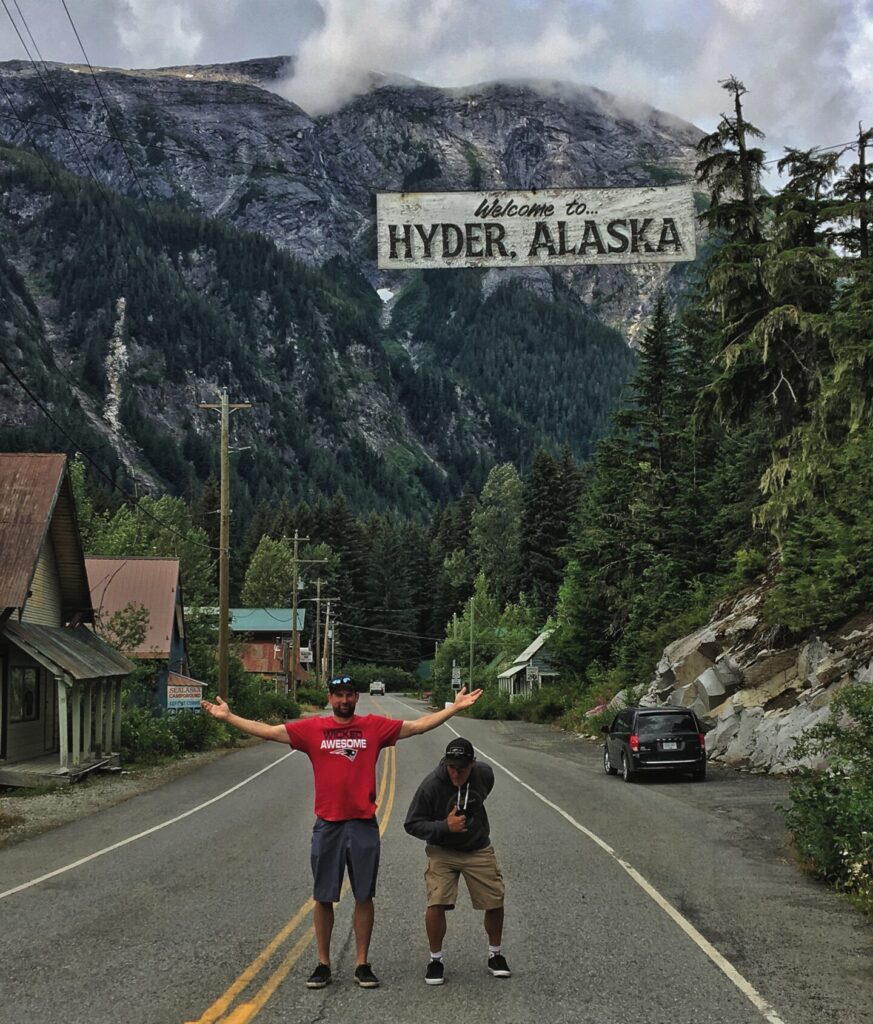
ONLY TWO MILES away, Hyder, Alaska, was a whole different story. With a dwindling population of somewhere around 80 residents, it’s often referred to as “the most Canadian town in Alaska” and can only be reached through Stewart. There is no US border services so Canadians can simply walk across. You do, however, need your Canadian passport to get back in. And you probably don’t want to be stuck in Hyder long-term.
Hyder boomed with the gold rush and nowadays holds a few quirky tourist traits like bear and glacier viewing. Its unmistakable draw, however, is the opportunity to get Hyderized, a ritual involving a shot of 150-proof alcohol and some quirky hillbilly culture. Enough said. We were in.
After walking across the “border,” McNeice and I entered the Glacier Inn and talked to the bartender. She explained the ground rules to getting Hyderized, including no smelling, tasting or sipping. We tossed back our shots, which were genuinely awful, and received our certificates of proof that we’d been Hyderized. Cross another one off the bucket list and order a beer.
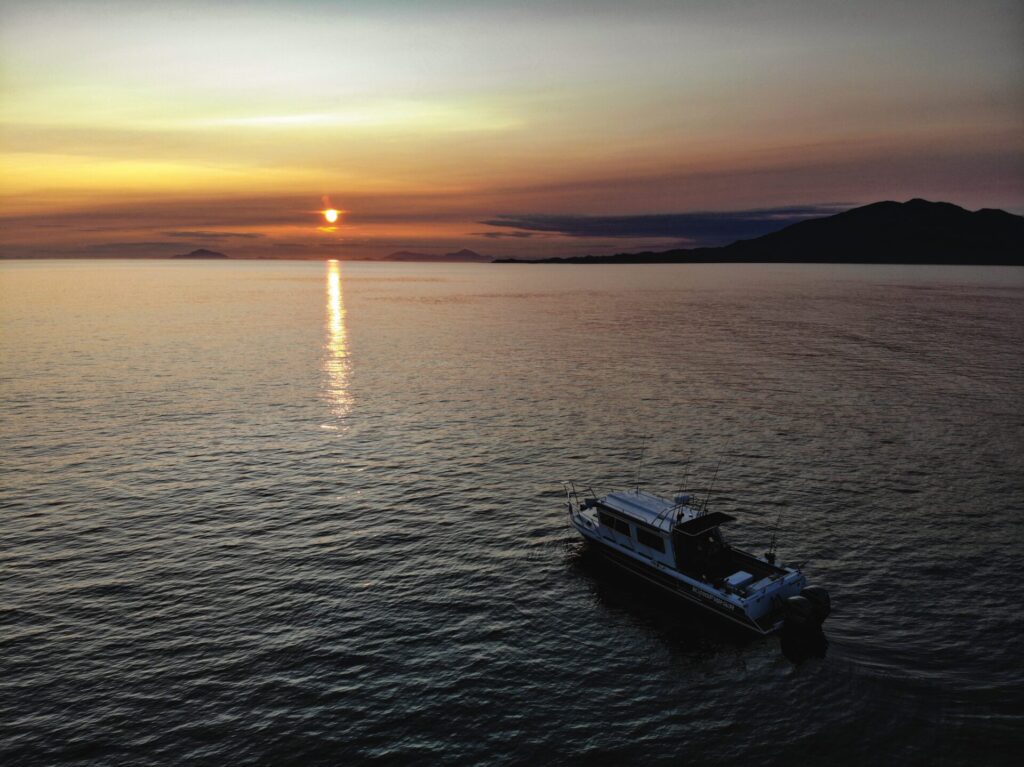 Cruising to Cape Fox for some successful fishing and a night on the hook.
Even with its signature laid-back pace, a couple days in Stewart/Hyder came and went in a flash. We shuttled our borrowed jerry cans back to the boat for an extra 80 gallons of fuel, loaded them into the Kingfisher and readied for our return trip. Early on Friday morning we bade Stewart/Hyder thanks and farewell and headed back down the Portland Canal.
 NOW NORMALLY THE trip home isn’t a primary feature of a big adventure, but we had saved a day for cruising back and the conditions turned awesome. Rain and clouds gave way to sunshine, and conditions kept improving as we slowly made our way south. With light winds and calm seas, our crew ran straight to Cape Fox, Alaska via the Portland and Pearse canals.
Walking the line back to Cape Fox was extraordinary, running an easy 26 knots and comfortable in fuel consumption and usage. We arrived at Cape Fox in late afternoon and once again set anchor to do a little halibut fishing.
With perfect jigging conditions, we brought some excellent halibut to the boat, a couple in excess of 60 pounds. McNeice even managed a giant lingcod, which he happily released. Weather was so good, in fact, that we decided to stay a night on anchor right there on our halibut coordinates.
INCREDIBLE LATE-DAY sunshine and the jubilation of a nautical adventure achieved gave way to a perfect evening on the Northern BC Coast. After dreaming of making this trip for way too long, reality provided an unreal, magical ending. Walking the line of the Portland Canal was complete. Calm waters, stunning sunset and all.