
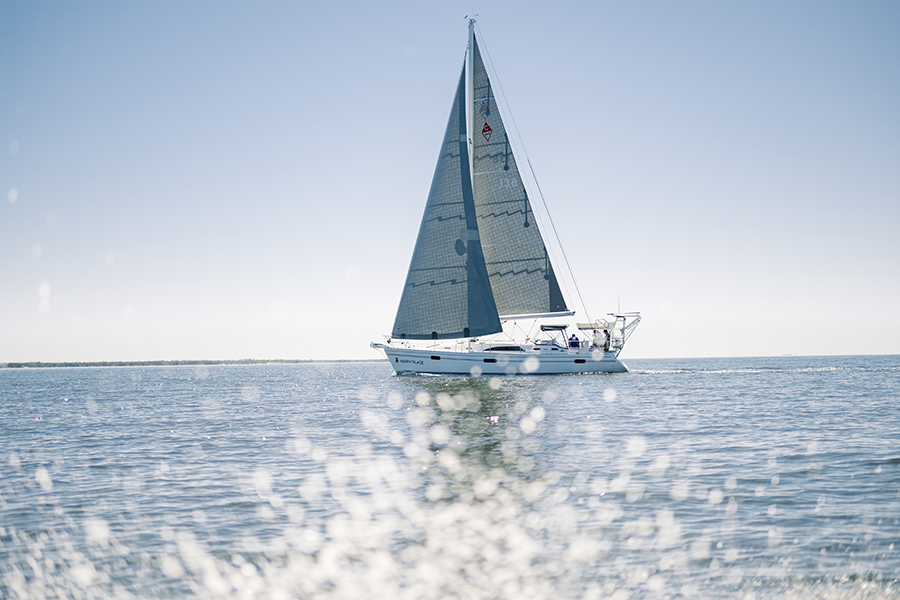

A mainsail and a headsail get most cruising boats most places, and honestly, that’s a perfectly good inventory for a lot of sailors. But if you’d rather sail than motor through the light stuff and the heavy stuff, a couple of well-chosen extra sails go a long way. Which ones make sense, though, depends partly on your rig.
Mainsail
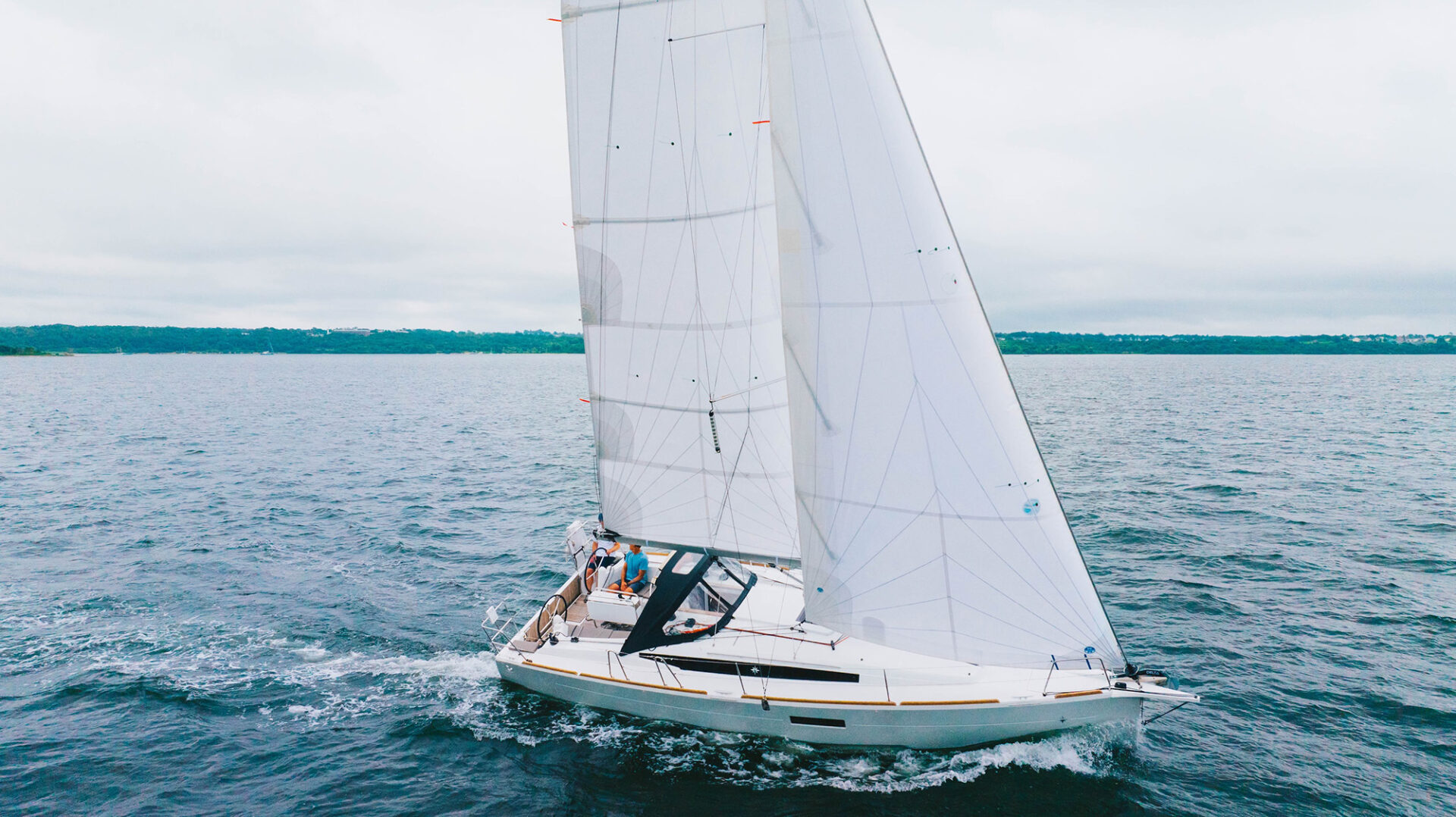
Full battens, lazy jacks, and a stack pack make a big difference for shorthanded handling, on any boat. On masthead rigs with a traditional slab main, anything that makes the sail easier to use makes you more likely to actually use it, so handling systems are a good place to put your money. Modern cruising laminates or 3Di sails are also a lot lighter and often softer than older Dacron mains, which helps with handling and can improve performance too. On swept-spreader boats, which typically carry a smaller, inboard-sheeted headsail, the main is doing more of the work, so its condition and shape matter more. And on either rig, if you’ve got a furling main, keep in mind the factory sail was likely built to furl easily when new, not necessarily to perform well or last for years.
Headsail

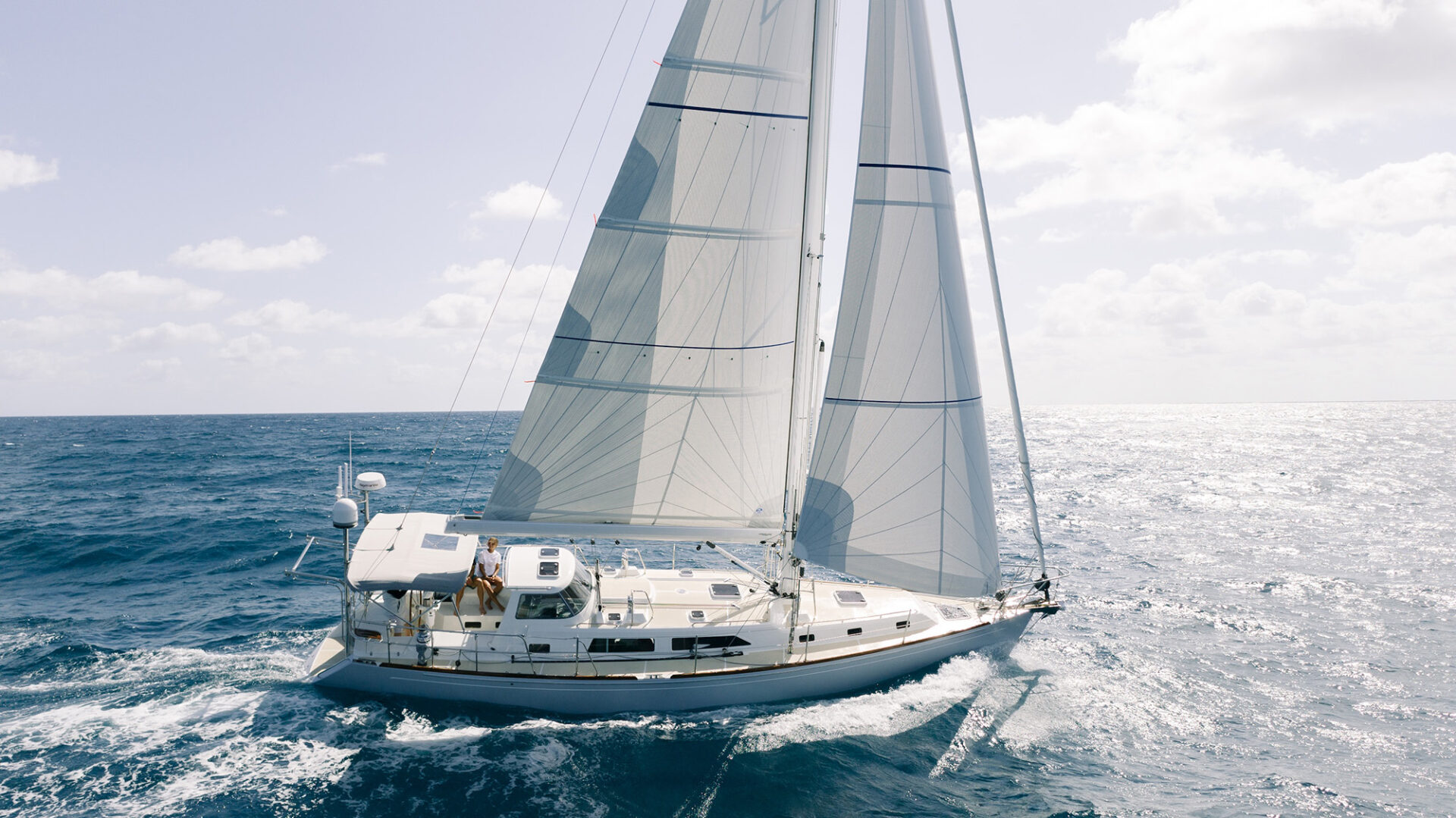
On masthead boats, diminishing returns set in above about 135 percent overlap. Bigger genoas are harder to tack and handle, and you’ll spend more time reefed than you’d like, which, despite all the progress in sail design and construction, is still hard on a sail. My advice is to go with the smallest headsail you think you can live with, then cover the offwind and light air work with a code sail or drifter instead of leaning on a big genoa.
Modern swept-spreader boats have the opposite problem: the factory jib is often great upwind and easy to tack, built for cost and easy furling, and usually missing vertical battens. Those battens matter on higher-aspect sails, they help the leech hold its shape and add sail area up high, close to the wind. Worth knowing too, these higher-aspect jibs tack easier and point higher, but they reach and run considerably worse than a bigger, lower-aspect genoa. Regardless of rig, a good furling system makes life easier shorthanded.
Downwind and Flying Sails

An asymmetric spinnaker, code zero, or drifter is easier to use than a symmetrical spinnaker and doesn’t require the pole and associated rigging. Masthead boats are often still set up for a pole, and while a bowsprit or fixed platform works well, it’s a costly upgrade. A furling drifter or code sail set just behind the headstay is often a much easier and less costly option. Swept-spreader, fractional-rig boats usually already have the tack point and higher-hoist halyard suited to a furling code sail or spinnaker, so it’s often just a matter of adding the sail.
Heavy Air
This one’s well covered elsewhere, and the short version holds up: a proper storm jib or heavy sail rarely gets used, but it earns its keep when you need it.
Bottom Line
There’s no universal “right” inventory, it follows the rig you’ve got. Know what your boat’s designed to do well, and add sails that fill the real gaps, not just the ones on a checklist.
Stuart Dahlgren is the manager of North Sails Victoria. To learn more about cruising inventories, contact vancouver@northsails.com or victoria@northsails.com