

*Written in partnership with North Sails
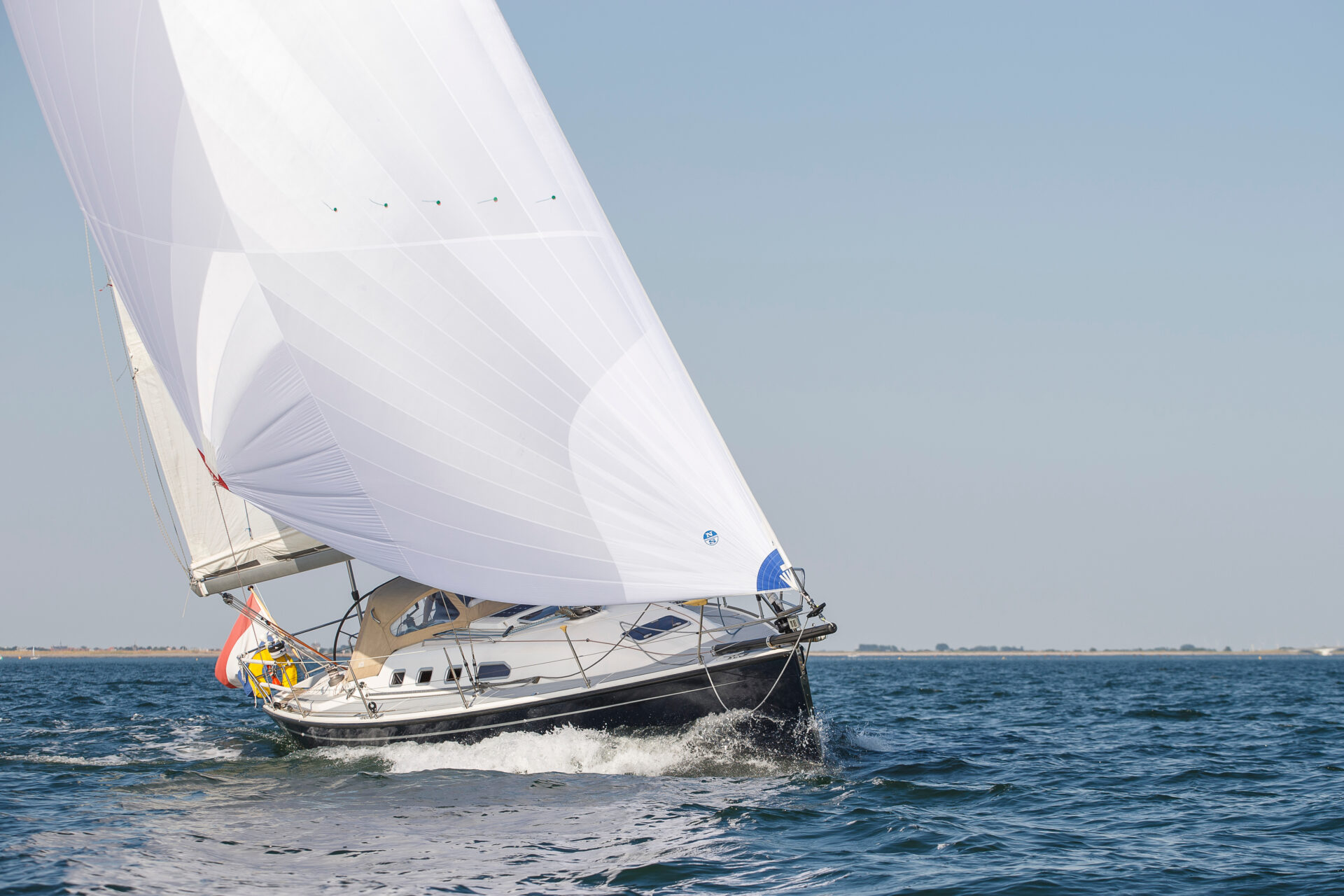
For decades, sailors had two basic downwind options: a jib or genoa on the headstay, and a symmetric spinnaker for deeper angles. For cruising sailors, flying sails offer a combination of performance, versatility, and ease of use. They add another gear to the sail inventory without the complexity traditionally associated with a spinnaker. This makes them useful for cruising and short-handed sailing.
What Makes a Flying Sail Different
Most flying sails are tacked to the bow or bowsprit and set on their own furling system, then hoisted on a halyard. Because the sail is not attached to the headstay, it can remain hoisted and furled, ready to deploy when the wind angle and strength are right.
Therefore, eliminating the need to repack a spinnaker, wrestle with a sock, or spend unnecessary time on the foredeck.
Two Main Families
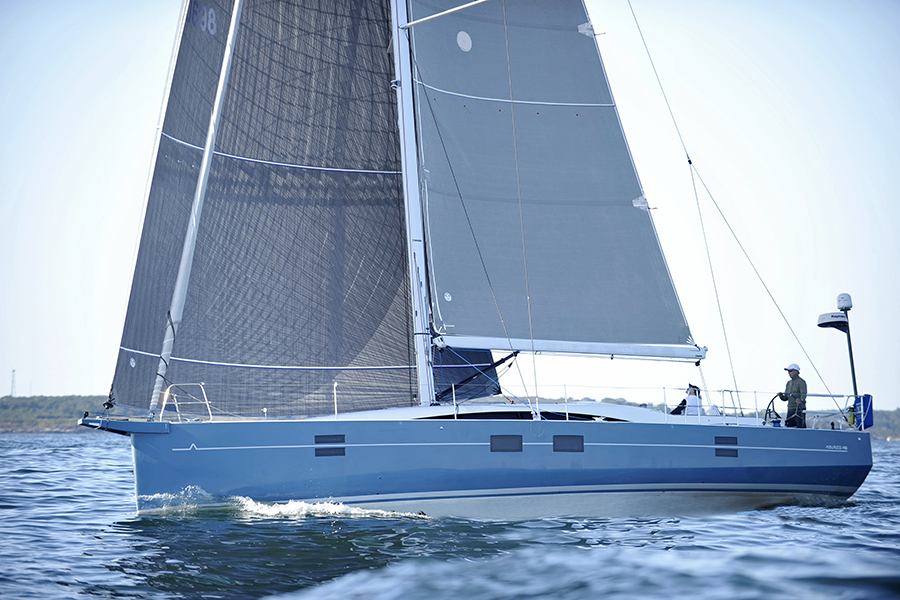
Code sails are flatter flying sails designed primarily for closer reaching angles, typically around 35 to 75 degrees of apparent wind angle, depending on the type. Mid-girth is one of the key factors determining how high a sail can effectively point. Code sails can also be optimized for cruising or racing requirements under rules such as PHRF, IRC, or ORC.
Furling cruising gennakers, by contrast, are designed to open up deeper angles without the pole, guys, or additional crew work associated with a traditional spinnaker. Their versatility makes them an excellent option to add range up to 150 degrees AWA to a cruising inventory with a single sail.
Furling: Bottom-Up vs. Top-Down
Flatter, smaller-girth sails (up to 60%) typically use bottom-up furling, where the tack rolls in first. Maintaining sheet tension helps keep the leech under control and produces a tight furl.
Broader, deeper sails such as cruising gennakers generally use top-down furling. The head begins to furl while the tack remains passive until most of the sail has wrapped around the cable. Getting the furling sequence right, along with maintaining proper halyard and cable tension, is essential for a secure furl.
Living With One
Furling a sail does not eliminate UV exposure or flogging. A sail left hoisted and furled can still experience wear, particularly if the furl is loose and begins to unwind in gusty conditions.
For extended periods when the sail is not being used, the best practice is to drop it, bag it, and store it out of the sun.
Retrofitting an Older Boat
A bowsprit is the simplest way to tack a flying sail, but its absence is not necessarily a dealbreaker. Many older boats can be retrofitted with a furling system, provided there is suitable space forward of the forestay and near the masthead. If this is too complicated some flatter flying sails can be flown behind the forestay The hardware, sheaves, halyards, and attachment points need to be appropriately rated for the loads.
Whether the goal is to improve cruising performance or simply sail more and motor less, a well-chosen flying sail can be one of the most versatile additions to a boat’s sail inventory.
To learn more about more flying sails, contact vancouver@northsails.com or victoria@northsails.com